
 INTERNATIONAL


Pulley Lagging 101: Everything You Need To Know
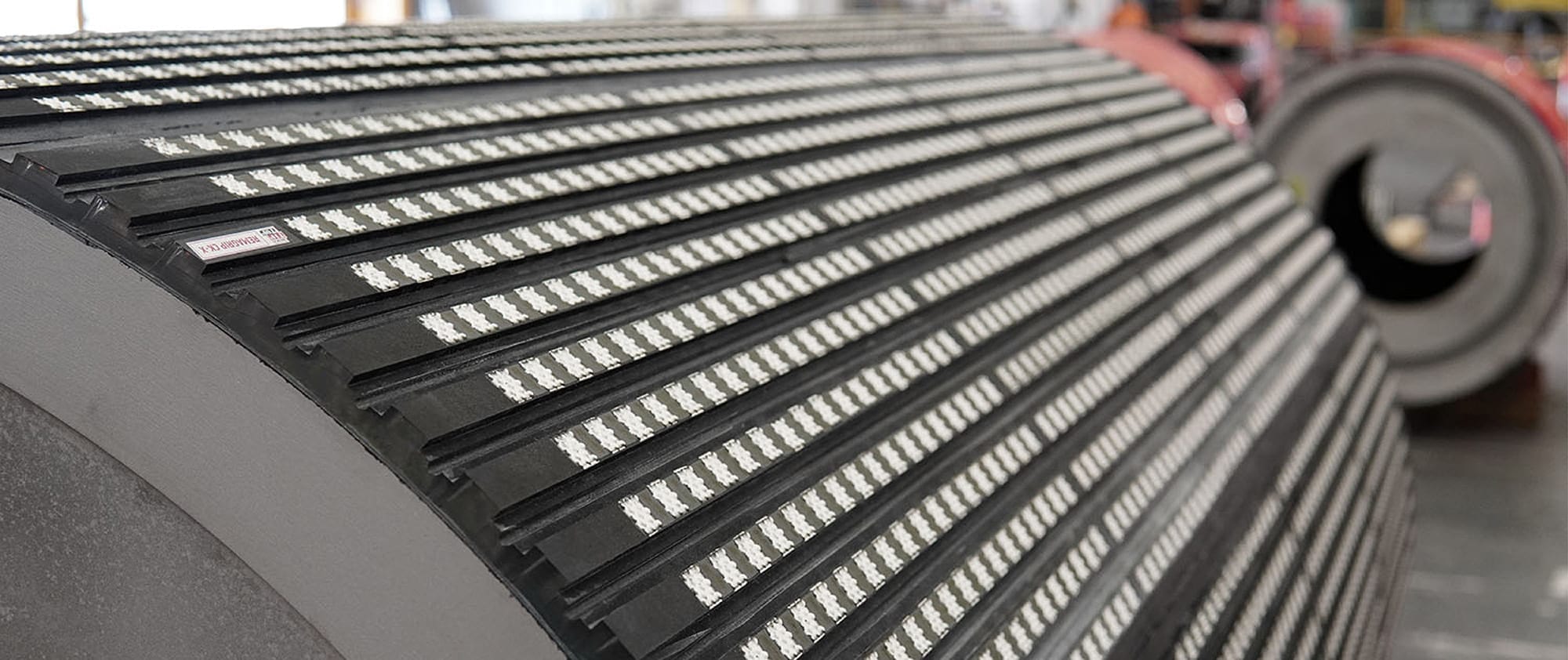
Pulley lagging, while seemingly simple, there’s multiple factors to consider when choosing the right pulley lagging for your application. This blog post will break down everything you need to know to make an informed decision about the right lagging for your system.
The basic elements
There are a few basic points of information that you’ll need to provide to your lagging supplier in order to choose the correct lagging for your application. These include:
Conveyor and belt specifications
- Belt rating (kN/m)
- Operating tension (Te)
- Pulley diameter
- Pulley position (drive, head, tail, bend)
Environment
- Is FRAS rubber required? FRAS stands for Fire Resistant, Anti-Static and is the regulatory requirement for underground mining (and some hard-rock) applications across Australia.
- Is there a lot of moisture or abrasion?
- Is the pulley placed in conditions where there is extreme heat or freezing temperatures?
Coefficient of friction
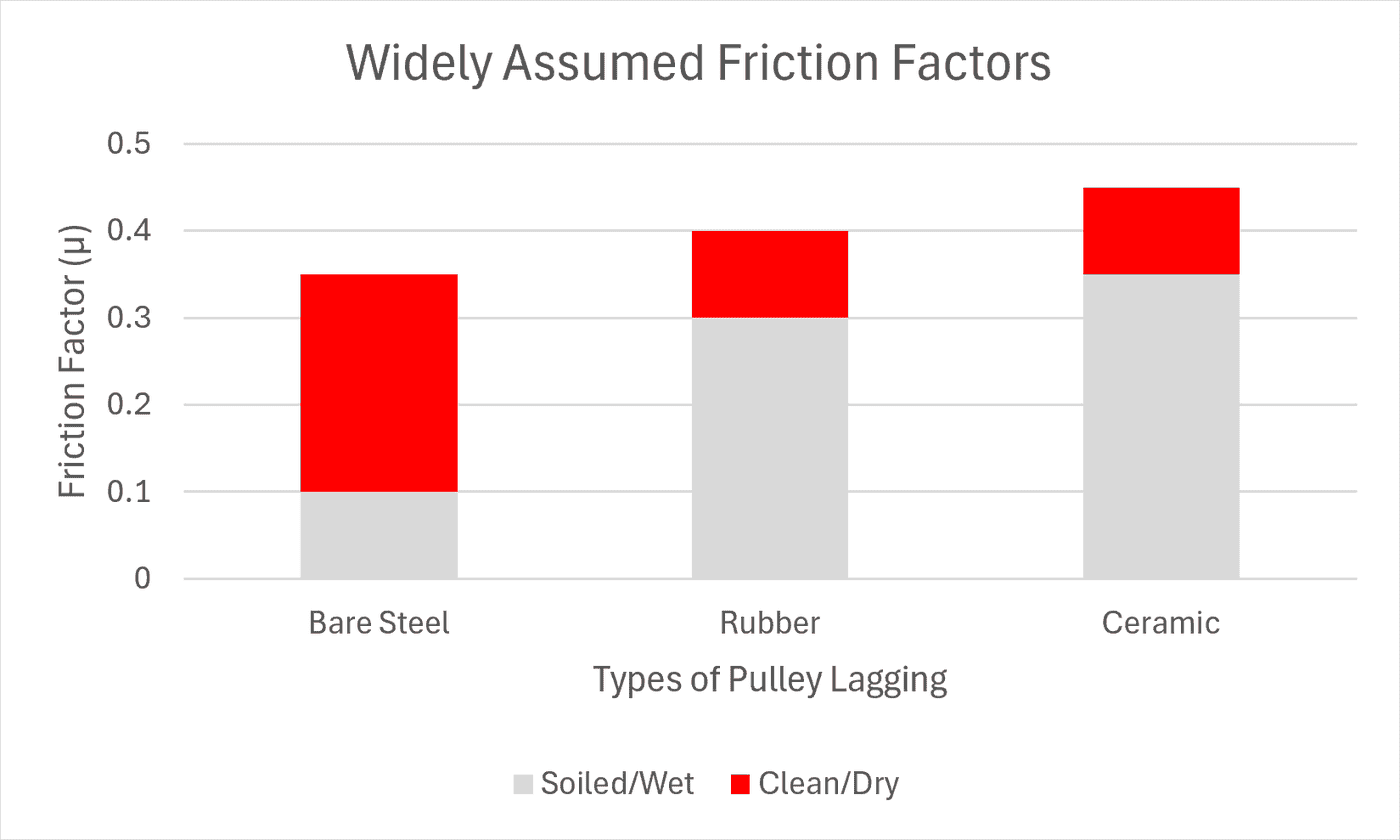
Calculating the desired coefficient of friction for your conveyor system has important outcomes. A greater coefficient of friction means a more effective transfer of power, which requires lower tensions and ultimately lower belt strength requirements. It can have an effect on the overall operation of your entire system. Below is a chart of widely assumed friction factors, however, it is important to ensure you have the above details available so that you can select the correct lagging for your application.
Installation methods
There are three types of installation widely used here in Australia:
Cold-bond of standard lagging
The rubber is bonded directly to the steel pulley shell using a primer and a contact adhesive. This installation method is suitable for all types of cured rubber lagging, and can be done in-situ with proper safety measures in place, if required.
Cold-bond of CN-lined lagging
CN backed lagging creates additional bond strength, higher than just a standard buffed rubber of regular lagging without a CN layer. This means that the chance of debonding is dramatically reduced.
Installation with a CN layer is very similar to that of lagging with no bonding layer. However, it is slightly quicker (another bonus!), as without a CN-layer, the rubber needs to be buffed and requires two coats of adhesive, which takes slightly longer and uses more product.
Hot vulcanised
Hot vulcanised applications use a layer of uncured rubber that bond to the pulley using a different set of primer and adhesives.
The uncured rubbers can be provided in a variety of different ways: uncured and left plain, uncured and grooved to your requirements (diamond, herringbone or circumferential patterns), or ceramic lagging.
The lagging covered pulley is then wrapped in specialised silk cloth which assists in applying pressure during the curing process. Once the silk fabric is applied, the pulley enters an autoclave which creates a superior bond through heat, pressure and time.
Other installation methods
Weld-on or hot-cast lagging are also available here in Australia on a smaller scale. Weld-on lagging can make it easy for in-situ installation. Hot-cast lagging is a popular option when considering polyurethane lagging, the raw material is applied directly to the pulley and grooves are hand-marked by the installer.
Popular types of lagging
Plain lagging
Plain lagging without any grooves can be used where no grip is required, such as for tail pulleys.
Diamond-rubber lagging
Diamond-rubber lagging is a true all-rounder. It can be used for drive and non-drive pulleys in wet and dry processing. The diamond-shaped profiling allows for dirt and water (or moisture) to be expelled or removed to allow better grip between the pulley and belt along with excellent abrasion resistance. This type of lagging also provides improved elongation, which provides proper flexibility and reduces the risk of belt slippage. It also helps the lagging accommodate geometric stress as the conveyor belt wraps around the pulley. It’s suitable for high-tension, critical applications.
Ceramic lagging
There are multiple types of ceramic lagging, but all ceramic lagging provides increased longevity when compared to rubber lagging types.
A closer analysis of ceramic tiles
Smooth or dimpled
Dimpled tiles offer a stronger coefficient of friction, or increased grip. So it is valuable in very wet areas or when transporting sludge-like material. They are usually used on drive pulleys. Smooth tiles offer the longevity of a ceramic tile, in areas where increased grip is not needed (such as non-drive pulleys), but where high wear resistance is required.
Ceramic percentage
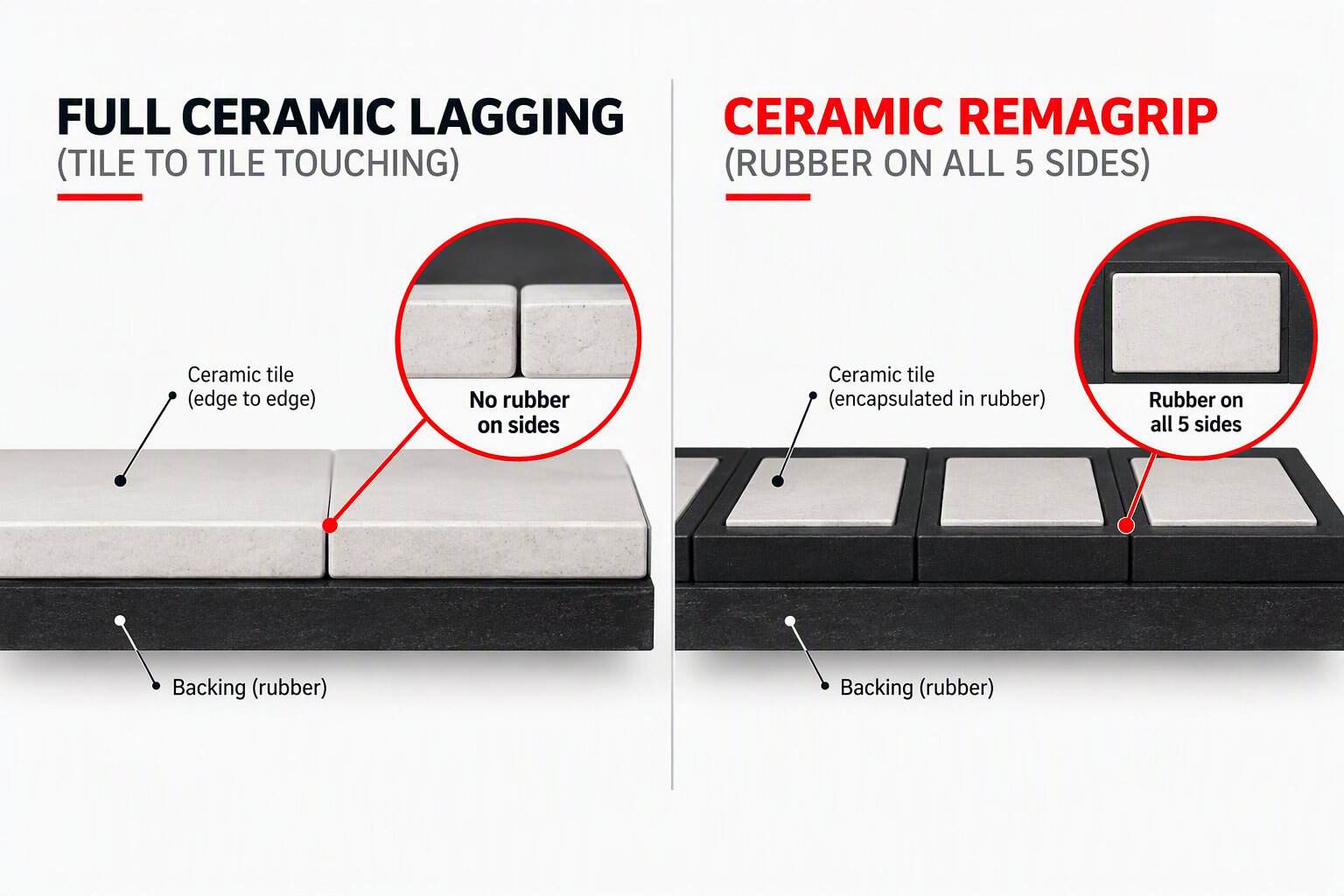
Some ceramic lagging will be offered in different percentages, meaning the percentage of ceramic compared to rubber. There are a few things to consider here. Ceramic lagging is mainly used for its longevity, as ceramic has a higher solidity level than rubber.
A ‘medium’ ceramic option is most popular, as it contains a high percentage of ceramic tile; while being fully embedded in rubber on all five sides. The extra rubber content also allows the tile to better flex within the rubber, to match the pulley/belt operating together with similar flex patterns. Having no rubber in between the tiles means these ceramics have limited movement or flexibility, sometimes causing chipped tiles or even dislodgement.
Other common types
Although rubber and ceramic are the main types of lagging, there are also others such as food-grade lagging or polyurethane. While polyurethane lagging is not a popular choice here in Australia, food grade lagging made of specialised material suitable for food processing is a useful option for the food industry.
Choosing the right lagging for your application can be difficult. There are a range of factors at play, and sometimes complex calculations taking your conveyor dynamics into account are required. If you’re unsure what the best lagging is for your application, call us on 1300 96 96 01 or contact our team.